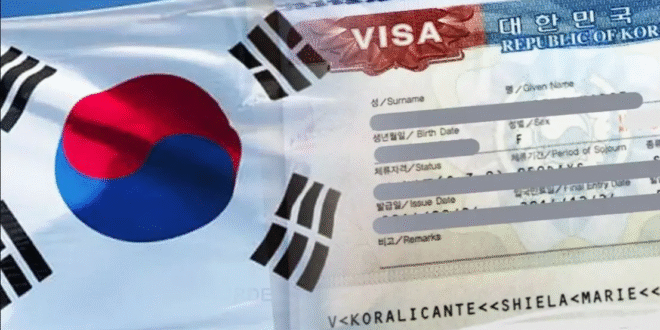
South Korea Work Permit Visa – Big Opportunity for Bangladeshis
South Korea, a nation that seamlessly blends ancient tradition with hyper-modern innovation, has emerged as a global economic and cultural powerhouse. From the bustling streets of Seoul to the leading headquarters of conglomerates like Samsung and Hyundai, the country offers a dynamic environment for professionals worldwide. However, embarking on a professional journey in the Land of the Morning Calm requires navigating its specific immigration laws. The gateway to this experience is not a single document but a suite of work permit visas, each tailored to different professional backgrounds and intentions. Understanding the intricacies of the South Korea Work Permit Visa system is the first and most crucial step for any aspiring expatriate.
The Foundation: Why a Work Permit is Essential
At its core, a work permit visa is a legal authorization that allows a foreign national to be employed in South Korea. It is fundamentally different from a tourist visa. Engaging in any paid work on a tourist visa is strictly illegal and can result in deportation, hefty fines, and a ban on re-entering the country. The work permit system exists to regulate the foreign labor market, ensure that incoming professionals fill necessary roles without displacing local workers, and protect the rights of the foreign employees themselves.

The entire process is a symbiotic relationship between the prospective employee and the Korean employer. One cannot proceed without the other, making the securing of a job offer the non-negotiable starting point.
The Alphabet of Opportunity: Key Work Visa Categories
South Korea’s work visa system is primarily structured around the E-series of visas. The specific type you apply for depends entirely on your professional field, qualifications, and the nature of the job. Here’s a breakdown of the most common categories:
1. E-7 Visa (Specific Activity): The Specialist’s Route
The E-7 is a catch-all visa for professionals in fields that are not covered by other specific visas but require specialized knowledge or skills. This is one of the most common pathways for foreign workers. The key here is “specialization.” The role must be one that cannot be easily filled by a local candidate. Applicants must have a bachelor’s degree or higher relevant to the field or possess at least five years of related work experience. The E-7 covers a vast range of industries, from IT and engineering to marketing and design.
2. E-9 Visa (Non-Professional): The Manufacturing and Manual Labor Visa
The E-9 visa is designed for foreign nationals employed in specific sectors that face a shortage of domestic labor. This includes manufacturing, agriculture, livestock, fishing, and construction. Unlike the E-7, the E-9 does not require a university degree. However, the process is highly regulated through a quota system and often involves government-to-government memorandums of understanding (MOUs) with the applicant’s home country. Recruitment is typically managed through official agencies.
3. E-2 Visa (Teaching): The Language Instructor Visa
Famous for bringing thousands of English teachers to Korea each year, the E-2 visa is exclusively for foreign language instructors. The primary requirements are holding a passport from a recognized English-speaking country, possessing a bachelor’s degree in any field, and undergoing a mandatory national-level criminal background check from one’s home country. While English teaching is the most common, the E-2 also applies to teachers of other languages.
4. Other Notable Visas:
-
E-5 (Professional): For licensed professionals such as lawyers, accountants, and doctors who have received official certification in South Korea.
-
E-6 (Culture and Art): For individuals engaged in cultural and artistic activities, including musicians, artists, and models.
-
E-1 (Professor): For full-time professors at accredited Korean universities and colleges.
-
F-2 (Residence) and F-5 (Permanent Residence): While not work permits per se, these statuses grant the holder the right to work freely without a specific employer sponsorship.
The Two-Step Application Process: From Employer to Embassy
Obtaining a South Korean work permit is a two-stage process that involves both the employer in Korea and the employee in their home country.
Step 1: The Visa Issuance Number (South Korea)
The process begins with the Korean employer. They must apply on your behalf at the local Immigration Office in South Korea for a “Visa Issuance Number.” This is a crucial pre-approval that confirms the Korean government has vetted the employer and the job offer and found them to be legitimate. To do this, the employer submits a packet of documents, which typically includes:

-
A copy of the employee’s passport.
-
The signed employment contract.
-
The company’s business registration certificate.
-
Documents proving the employee’s qualifications (diplomas, transcripts, career history).
-
A business plan explaining the necessity of hiring a foreigner.
Once approved, the Immigration Office issues a Visa Issuance Number, which the employer then sends to the prospective employee.
Step 2: The Visa Stamping (Home Country)
With the Visa Issuance Number in hand, the employee can now apply for the actual visa sticker in their passport. This is done at the nearest Korean Embassy or Consulate. The applicant will need to submit:
-
Their original passport.
-
The completed visa application form.
-
A passport-sized photo.
-
The Visa Issuance Number.
-
The visa application fee.
After processing, the embassy will place the visa in the passport, allowing the individual to travel to South Korea as a worker.
Arrival and Beyond: The Alien Registration Card (ARC)
Your work visa allows you to enter the country, but the process doesn’t end at the airport. Within 90 days of arrival, you must visit the local Immigration Office to apply for your Alien Registration Card (ARC). This plastic ID card is your most important document in Korea. It acts as your official national ID, proving your legal status, and is required for everything from opening a bank account and getting a mobile phone plan to signing a lease for an apartment.
Common Challenges and Important Considerations
-
Sponsorship is Key: You cannot apply for a work visa without a sponsoring employer. Your legal status is tied to that employer. Changing jobs requires a new application and approval from immigration.
-
Degree Requirement: For most professional visas (E-7, E-2), a bachelor’s degree is a minimum requirement, and it must be authenticated.
-
Health Check: All foreign workers are required to undergo a comprehensive medical check-up, including a drug test and a test for infectious diseases like Tuberculosis, after arriving in Korea.
-
Tax Obligations: As a legal worker, you will be subject to Korean income tax and must enroll in the National Pension Scheme, Health Insurance, and Employment Insurance.


